
Speedy Blue Symbiote
NEXCOSMOAction
4.733.00 Reviews
- Version
- 1.6.1
- Installs
- 5.00M
- Age Rating
- Everyone 10+
Screenshots
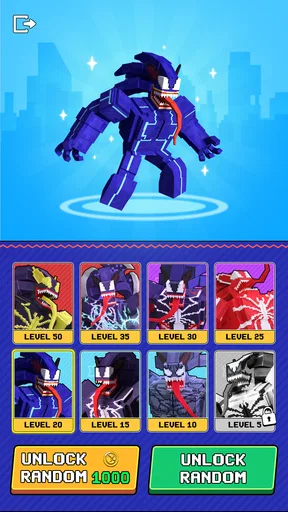
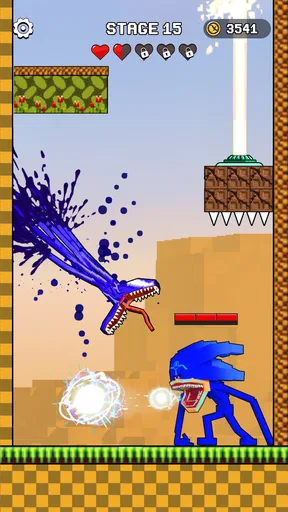
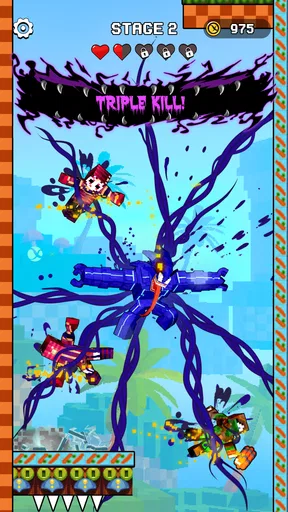
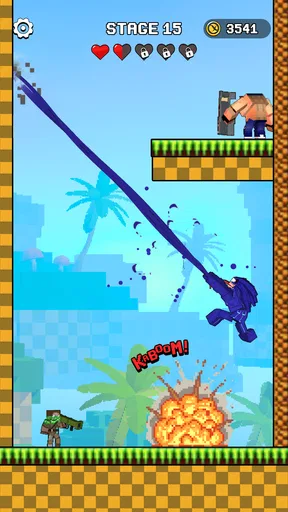
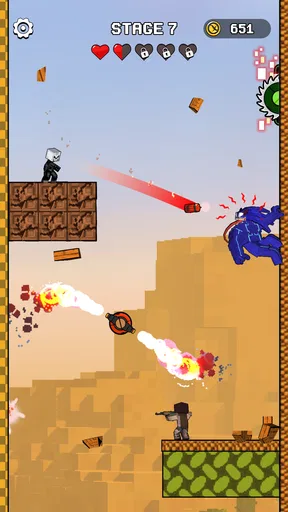
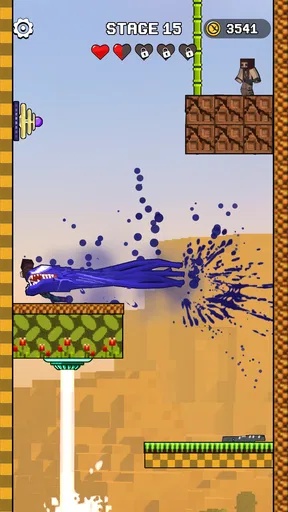
Our Review of Speedy Blue Symbiote
 Analysis by Appyee
Speedy Blue Symbiote is the kind of action puzzle game I reach for when I want quick decisions rather than a long story or a complicated control scheme. Its central appeal is easy to understand: movement, timing, shooting, and puzzle-like positioning are brought together in short bursts. That combination gives it a more active feel than a traditional brain teaser, while keeping the basic idea approachable enough for casual players.
Developed by NEXCOSMO, the game is free to download and aimed at players aged 10 and over. It has built a sizeable audience, with more than five million installs and a 4.7 average from roughly thirteen thousand ratings. Those figures suggest that the simple blue-symbiote concept has found an audience, but they do not replace hands-on judgment. After spending time with it, I see a game that works best when I treat each attempt as a small problem to solve, not as a button-mashing shooter.
How I approach each play session
My baseline workflow is deliberately simple. I begin by watching the opening moments of a stage instead of immediately reacting to every target. In an action puzzle, the first mistake is often assuming that speed alone matters. Here, the useful question is usually where I need to be before firing, not merely what I can shoot right now. A few seconds of observation can prevent a rushed move that leaves the next action awkward.
I then establish a repeatable rhythm: identify the immediate threat, choose a safe position, fire with purpose, and reassess the space. This sounds obvious, but it changes the way the game feels. Players who treat every screen as a reflex test may find themselves repeating the same error. I get better results when I separate movement decisions from shooting decisions, even when both happen quickly.
The blue symbiote theme gives the experience a recognizable identity, but the real reason to keep playing is the interaction between action and arrangement. I am not only asking whether I can hit something. I am also asking whether that shot improves my next position, opens a safer route, or leaves me exposed. That extra layer is what makes the game more interesting than a basic target-shooting exercise.
A realistic everyday use case is a short break between tasks. I can start a session without committing to a large campaign or learning a deep control system. A few attempts are enough to understand what went wrong, and the immediate restart loop makes experimentation natural. It suits someone who enjoys compact challenges while waiting for a train, taking a break from study, or relaxing before bed.
It is less suitable for someone looking for a rich narrative, a large exploration map, or a highly social competitive experience. The game’s appeal is concentrated in its moment-to-moment action puzzle format. If your preferred mobile games are slow strategy titles with extensive planning screens, or shooters built around long multiplayer matches, this will feel much more focused and limited.
The first habit that improves consistency
I recommend using the opening attempt on a new challenge as reconnaissance. Instead of trying to finish immediately, I look for the order in which threats appear and note which movement creates trouble. This is especially useful when a stage seems unfair at first. Often the difficulty comes from choosing an inefficient sequence rather than from a lack of reaction speed.
On the next attempt, I repeat the beginning rather than improvising from the first second. That creates a stable opening and gives me more attention for the part that caused the failure. This habit is more valuable than simply playing faster. It turns repetition into practice instead of making every attempt a completely new scramble.
Another useful routine is to avoid firing just because a target is available. A shot can be technically successful and still be strategically poor if it forces an uncomfortable reposition. I prefer to wait for a cleaner angle when the game gives me room to do so. That small delay often makes the following action easier, particularly for players who are still learning the timing.
Settings and controls worth checking before serious play
Before judging the difficulty, I check the available control and presentation options on my device. Mobile games can feel very different depending on screen size, touch sensitivity, and whether visual effects make important objects harder to read. I do not assume that the default arrangement is ideal. I spend a few minutes testing how movement and shooting respond, then keep the setup that lets me make small corrections without oversteering.
This matters because precision is more important here than raw speed. If a control feels too sensitive, I make deliberate, shorter inputs rather than dragging across the screen in large sweeps. If the screen feels crowded, I focus on the clearest visual landmarks and avoid chasing every animation. The goal is not to make the game easier artificially; it is to remove avoidable handling mistakes.
I also check sound before settling into a longer session. Audio can help me stay aware of actions, but it can also become distracting if I am playing in a noisy environment or trying to concentrate on visual timing. I prefer a level that lets me distinguish useful feedback without making the presentation tiring. When I play quietly, I compensate by watching the action more carefully and using the pause between attempts to review what happened.
The current version is 1.6.1, and the game runs on Android 7.0 or later. That makes it accessible to a broad range of Android devices, although compatibility does not guarantee identical comfort on every phone. A smaller display may make touch placement more demanding, while an older device may make fast visual changes feel less smooth. I would test the controls during a short session before deciding whether the game suits a particular handset.
One setting-related trade-off is convenience versus concentration. Keeping every effect active can make the game feel lively, but reducing distractions may help when I am learning a difficult pattern. I do not change options constantly. Instead, I create one comfortable setup, play several attempts with it, and only adjust something when I can identify a specific problem. That prevents settings from becoming another source of uncertainty.
How I use the free entry point
The free price makes it easy to try without making a purchase decision first. I would use that advantage properly: play enough sessions to decide whether the action-puzzle loop itself is enjoyable before considering optional spending. In-app purchases are listed at $1.99 per item, so I would treat them as a convenience or support choice rather than part of the basic test.
My advice is to avoid buying anything during a frustrating streak. When I am failing repeatedly, it is difficult to tell whether a purchase would genuinely improve the experience or simply interrupt the learning process. I would first change my approach, check the controls, and replay the opening pattern. If the game remains enjoyable after that, I can make a calmer decision about whether an optional item is worthwhile.
Faster patterns that still leave room for control
Experienced play in Speedy Blue Symbiote is not about holding the fastest possible pace at all times. It is about reducing wasted decisions. I try to group actions into small patterns: move into a useful position, take the necessary shot, and immediately prepare for the next safe location. This is faster than reacting separately to every visual change because it gives each action a purpose.
The first pattern I look for is a safe opening. If the start of a stage is predictable, I repeat the same movement and firing sequence until it becomes comfortable. That frees my attention for the later section. The important point is not memorizing blindly. I still watch for the moment when the pattern changes, because continuing an old routine after the situation changes is a common cause of failure.
The second pattern is controlled repositioning. I avoid moving farther than necessary, especially after a successful shot. Large movements can solve the immediate problem while creating a new one. Small corrections are usually easier to recover from, and they keep me closer to a position from which I can respond to the next threat.
The third pattern is deliberate recovery. When an attempt starts badly, I do not always restart immediately. Sometimes continuing teaches me more about the later sequence than another perfect opening would. I use a damaged or awkward run to inspect what comes next, then restart once I understand the section. This makes failure useful and prevents the early part of a challenge from receiving all my attention.
For players who enjoy optimizing, I suggest tracking decisions mentally rather than chasing an imaginary score target. Ask which movement was unnecessary, which shot was premature, and where attention was lost. Those questions produce actionable improvements without requiring invented formulas or external tools. The game rewards a clear loop of observation, execution, and adjustment.
A practical routine for difficult attempts
When I reach a section that repeatedly stops me, I divide it into three parts. First, I identify the trigger that starts the problem. Second, I decide where I want to be before that trigger occurs. Third, I choose the smallest action that gets me there. This approach is more reliable than trying to react after the danger has already appeared.
I also give myself a limit on repeated attempts. If I make the same mistake several times, I pause rather than continuing with growing frustration. A short break helps me return with better timing, and it keeps the game from becoming a test of endurance. This is one of the reasons the title works well in short sessions: I can stop after learning something instead of feeling obligated to finish a long stage.
Another advanced habit is separating execution errors from planning errors. If I chose the right position but missed the timing, I need practice. If I reached the wrong position, faster fingers will not solve the issue. Making that distinction saves time and gives each retry a clear purpose.
Where the action-puzzle design reaches its limits
The same focus that makes the game approachable also defines its limitations. Players who need extensive customization, deep character development, or a large variety of modes may find the experience narrow. The blue symbiote identity is memorable, but the lasting appeal depends on whether the repeated shooting-and-positioning loop remains satisfying for you.
I would also be cautious about expecting the game to replace a full action game. Compared with a conventional mobile shooter, it places more emphasis on compact problem solving and less on broad combat systems. Compared with a pure puzzle game, it demands more timing and immediate control. That middle ground is its strength, but it can also disappoint players who want either side in a more complete form.
Touch controls create another possible friction point. Even a well-designed action puzzle can feel less precise on a small screen than with physical buttons or a controller. If your enjoyment depends on exact input every time, test the game on your usual device and pay attention to whether mistakes feel like your decisions or the interface. That distinction matters when deciding whether to continue.
The age rating of Everyone 10+ makes the game a reasonable option for younger players within that guidance, but parents should still consider the child’s tolerance for repeated failure and optional purchases. The free entry point is helpful, while the presence of $1.99 items means purchase controls on the device are sensible for family use.
I would skip this game if I wanted a passive experience. It asks me to watch, decide, and correct quickly. I would also skip it during moments when I am too tired to concentrate, because the short format can tempt me into repeating attempts without learning from them. A slower puzzle game may be a better choice when I want calm planning rather than active timing.
What separates practice from frustration
For me, the dividing line is whether each retry reveals something. If I can explain why the previous attempt failed and what I will change, the loop feels rewarding. If I am only repeating the same movement without understanding it, the game becomes irritating. I recommend keeping sessions short enough that this distinction remains visible.
It also helps to change only one variable at a time. I might alter my opening position while keeping the firing order the same, or keep the movement while delaying one shot. Changing everything at once makes it impossible to know which adjustment worked. This is a small but important technique for anyone who wants to improve rather than simply hope for a better result.
The game’s popularity gives it useful reassurance for curious players, with around thirteen thousand ratings contributing to its 4.7 average. I still would not treat that reception as a guarantee that every player will enjoy it. The right audience is someone who likes compact action challenges, visual problem solving, and the satisfaction of turning a failed attempt into a repeatable solution.
My verdict after learning its rhythm
Speedy Blue Symbiote is a focused free action game that earns its place through the connection between shooting and puzzle-like movement. I like that it can be understood quickly but still rewards better habits. The most satisfying moments come when a sequence that once felt chaotic becomes manageable because I changed the order of my actions, not because I simply reacted faster.
Its strongest use case is the short, repeatable session. I can play for a few minutes, identify a mistake, and return later with a specific plan. The game also suits players who enjoy refining execution and finding safer, cleaner patterns. It is less convincing for anyone seeking a substantial story, broad exploration, deep customization, or a full-scale multiplayer alternative.
NEXCOSMO has chosen a clear middle ground between a mobile shooter and an action puzzle. That choice gives the game its personality, but it also means the experience depends heavily on your taste for repetition. I recommend approaching it with a learning mindset: inspect the opening, establish a reliable route, adjust one decision, and stop when concentration fades.
With a free download, support for Android 7.0 and later, and a current version of 1.6.1, it is easy to try on a compatible device. I would begin without spending, settle the controls, and judge the core loop over several calm attempts. If you enjoy turning quick failures into precise routines, this is a worthwhile pick. If you want a larger action package or a slower, more relaxed puzzle experience, another game will probably serve you better.
My final recommendation is therefore positive but specific: choose it for focused bursts of blue-symbiote action, not as an all-purpose mobile game. The key to enjoying it is controlled repetition, not frantic speed. Once I accepted that, the compact stages became more readable, my decisions became cleaner, and the game’s simple premise showed more depth than its brief store summary suggests.
For players who like that style, Speedy Blue Symbiote is an accessible challenge with enough room for personal technique. I would keep it installed as a quick action-puzzle option, especially for those moments when I want something active, direct, and easy to return to without a long setup.
Verdict
Strengths of Speedy Blue Symbiote
- Fast-paced symbiote-themed action keeps short sessions engaging.
- Simple controls make the game easy to pick up on mobile.
- Bright visuals and effects give battles a lively appearance.
- Quick challenges suit players looking for brief entertainment.
- The unusual blue symbiote theme adds a distinctive identity.
Limitations of Speedy Blue Symbiote
- Gameplay may become repetitive after extended play sessions.
- Some levels can feel more difficult than expected without upgrades.
- Visual effects may distract from hazards during busy moments.
- Progression may feel slow for players who prefer rapid rewards.
- Requires a compatible device with enough storage and free memory.
Similar Picks in This Category
View All
Temple Run 2: Endless Escape
Imangi Studios4.1

PUBG MOBILE
Level Infinite4.3

Free Fire: 9th Anniversary
GARENA INTERNATIONAL I4.4

Talking Tom: Hero Dash Run
Outfit7 Limited4.3

slither.io
Lowtech Studios3.9

Sniper 3D:Gun Shooting Games
Wildlife Studios4.6
Frequently Asked Questions
What is Speedy Blue Symbiote?
Speedy Blue Symbiote is presented as an action-focused mobile game featuring a fast blue symbiote-inspired character. Players generally move through levels, avoid hazards, defeat enemies, and collect items while using the character’s agility and special abilities. Before downloading, users should check the current store description and screenshots, because the exact gameplay modes, story, and available features may vary between versions or updates.
How do you play Speedy Blue Symbiote?
The game is designed around quick reactions and movement. Depending on the version installed, you may control the character by tapping, swiping, or using on-screen buttons to run, jump, attack, dodge obstacles, and progress through stages. New players should spend time learning the controls in the opening levels, since timing is usually important when facing traps, enemies, or fast-moving sections.
Is Speedy Blue Symbiote free to download and play?
Speedy Blue Symbiote may be available as a free download, but users should review the official Google Play Store or App Store listing before installing it. Some free games include advertisements, optional purchases, locked content, or other monetization features. Checking the price, in-app purchase information, permissions, and recent user reviews is the best way to understand what the current version offers.
Does Speedy Blue Symbiote require an internet connection?
The internet requirements can depend on the game version and the features included by its developer. Basic levels may work offline after installation, while advertisements, updates, online rewards, analytics, or additional content may require a connection. If offline play is important to you, test the game in airplane mode after downloading and consult the store listing for the developer’s latest requirements.
Is Speedy Blue Symbiote suitable for children?
Parents should check the official age rating and content details before allowing children to play Speedy Blue Symbiote. Although the colorful character design may appeal to younger users, action games can include cartoon violence, advertisements, purchases, or links to external pages. It is also advisable to review privacy information, configure parental controls, and disable unauthorized in-app purchases on the device.
Play our best games!


